MANUFACTURING ENGINEERING · AEROSPACE & DEFENSE

Parth Deshpande

Mechanical and Manufacturing Engineering Technologies, B.S. — Texas A&M University, 2028

LinkedInResume

01 · ABOUT

I'm a manufacturing and mechanical engineering technology student with hands-on floor experience in a high-volume automotive production environment and a precision fabrication background from a competitive high-power rocketry team. During my internship at North American Lighting, I built a custom Python DAQ tool that cut per-sample logging time by 93%, and hand-built 50-75 headlamp assemblies to support tooling runoff verification ahead of Start of Production. I'm currently a Structural Engineer on the Sounding Rocketry Team at Texas A&M University, working on a vehicle weighing/CG measurement system and a water deluge system for static fire testing of a liquid, bi-propellant, regeneratively cooled vehicle. I'm looking for a manufacturing or process engineering internship where I can bring my abilities to production hardware and grow as an engineer.

02 · PROJECTS

IN PROGRESS

Water Deluge GSE System — Lumina

Water Deluge GSE System — Lumina

Auxiliary water deluge system for static fire testing of TAMU's first bipropellant regeneratively-cooled liquid vehicle.

PROBLEM
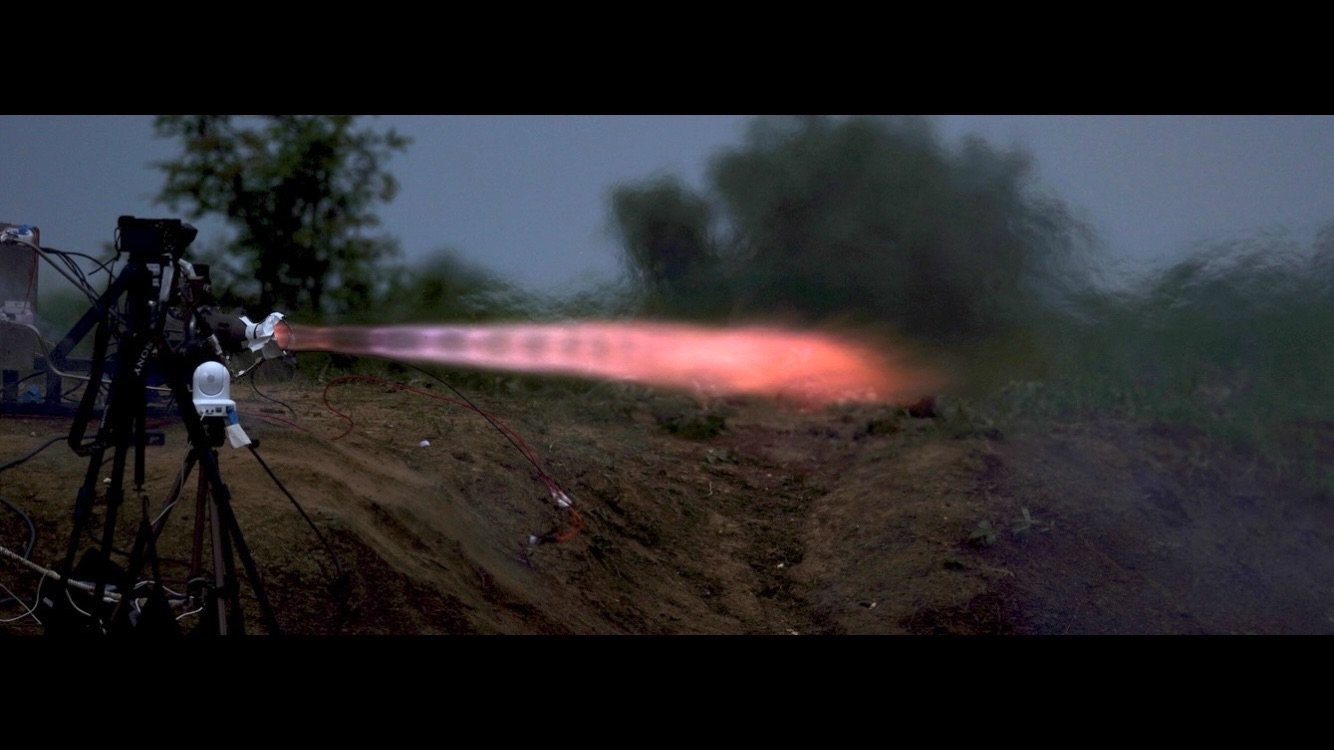
Lumina (TAMU's first bipropellant, regeneratively-cooled liquid rocket) will be tested in a vertical test stand as part of its testing campaign however a water deluge was added to mitigate fire and sound.
ACTION
Responsible Engineer for the system: designing a deluge built from 3 standard American kegs, backpressurized to push water out for the duration of a static fire, without requiring a pump.
STATUS
In development alongside the broader Lumina test campaign; flow rate and pressure targets still to be calculated.
GSEPressure SystemsMechanical Design
Vehicle Weighing & CG Measurement Rig — Hadron

Four-point load cell scale to estimate CG on SRT's Collegiate Propulsive Lander Challenge vehicle.

PROBLEM
Hadron, SRT's Collegiate Propulsive Lander Challenge (CPLC) vehicle, needed a way to estimate its center of gravity by weighing it at its four foot-ball contact points.
ACTION
I'm designing cups to seat the vehicle's ball-shaped feet, each mounted to a single-point beam load cell — one per foot, read independently rather than summed. My scope on this is only structural, not electronic. Minimizing and precisely locating the ball-to-cup contact area is the key accuracy driver, since CG estimation depends on knowing exactly where each load is applied.
STATUS
Will enable CG estimation for Hadron once complete.
Load CellsMetrologyMechanical Design
Starfighter — L2.5 Logging Vehicle

Starfighter — L2.5 Logging Vehicle

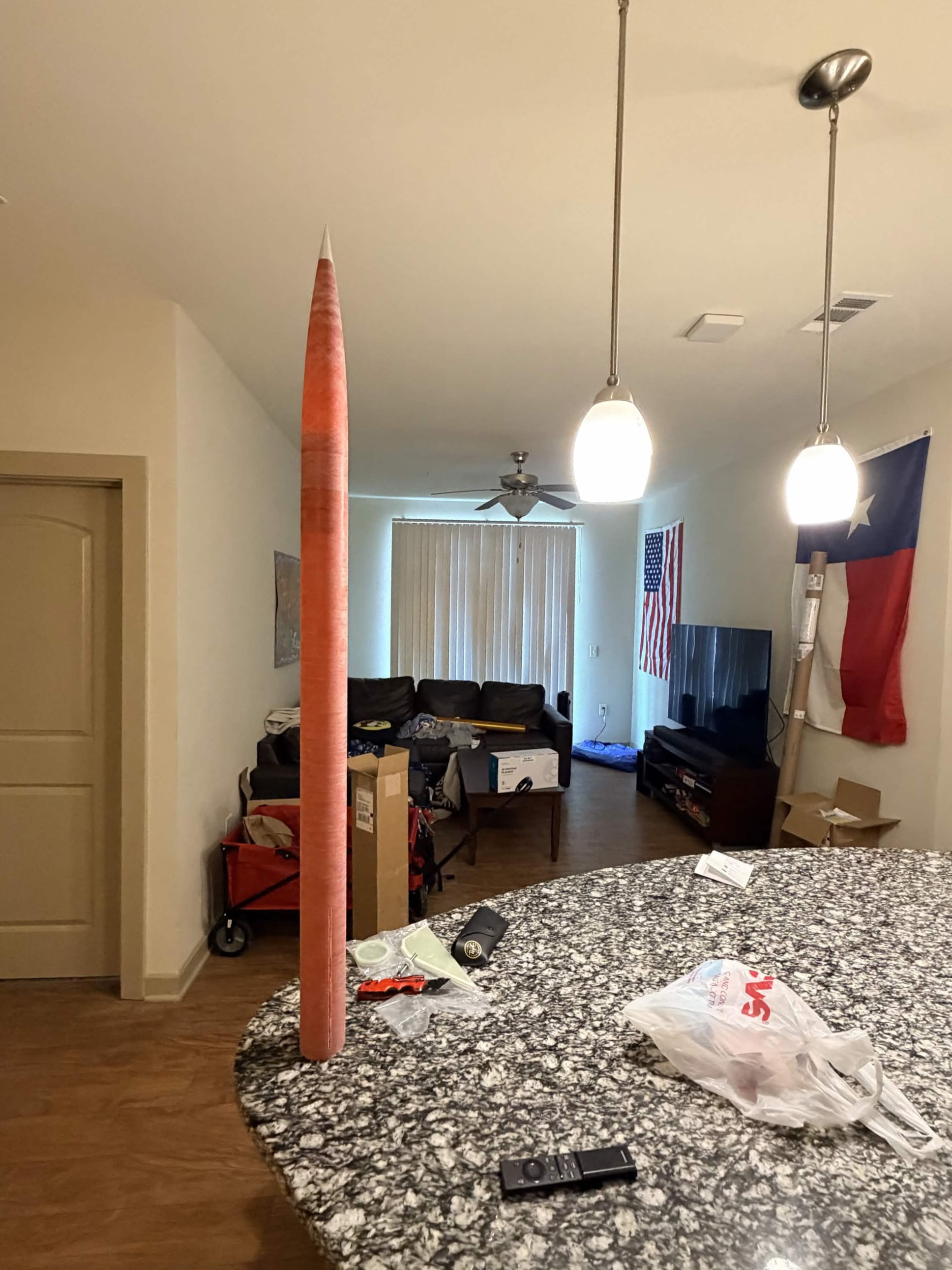
54mm min-diameter Wildman Punisher, built for high-K/low-L motor log flights ahead of L3.

PROBLEM
As part of my log flights prior to an L3 attempt, I decided to build a new, smaller vehicle that would force me to be creative in terms of design and look good while doing it.
ACTION
For this, I am building a Wildman 2.6" Punisher kit — a 54mm min-diameter airframe in fiberglass with a PETG sled. Based on the motor mount and airframe size, Starfighter will be able to fly on more powerful K and L motors, similar to what my L3 will be like.
STATUS
Starfighter is currently under construction, design, and simulation with a first flight expected in January of 2027.
TripoliHigh Power RocketryMin-Diameter

COMPLETED

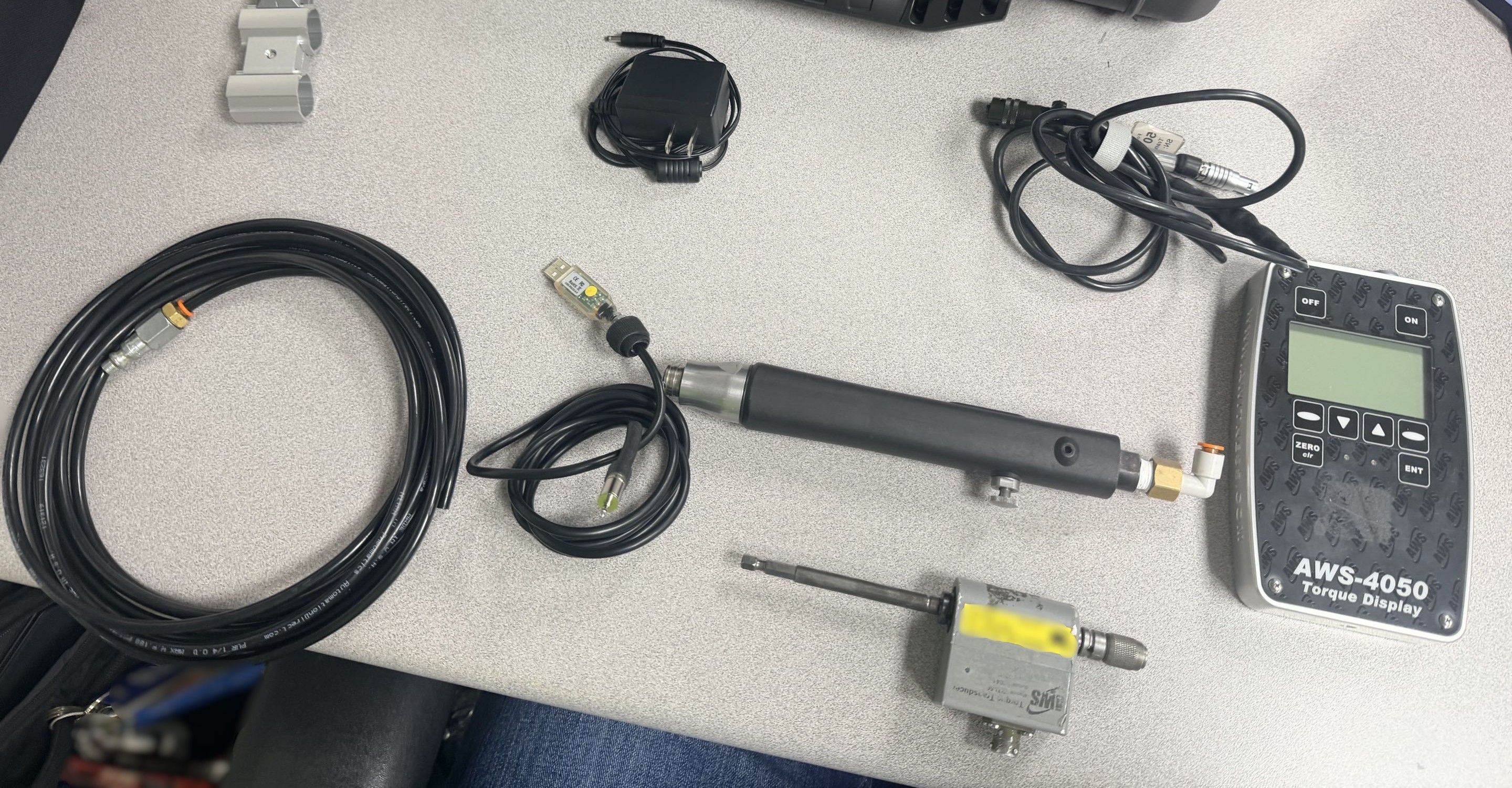
Torque Transducer DAQ & Visualization Suite

Torque Transducer DAQ & Visualization Suite

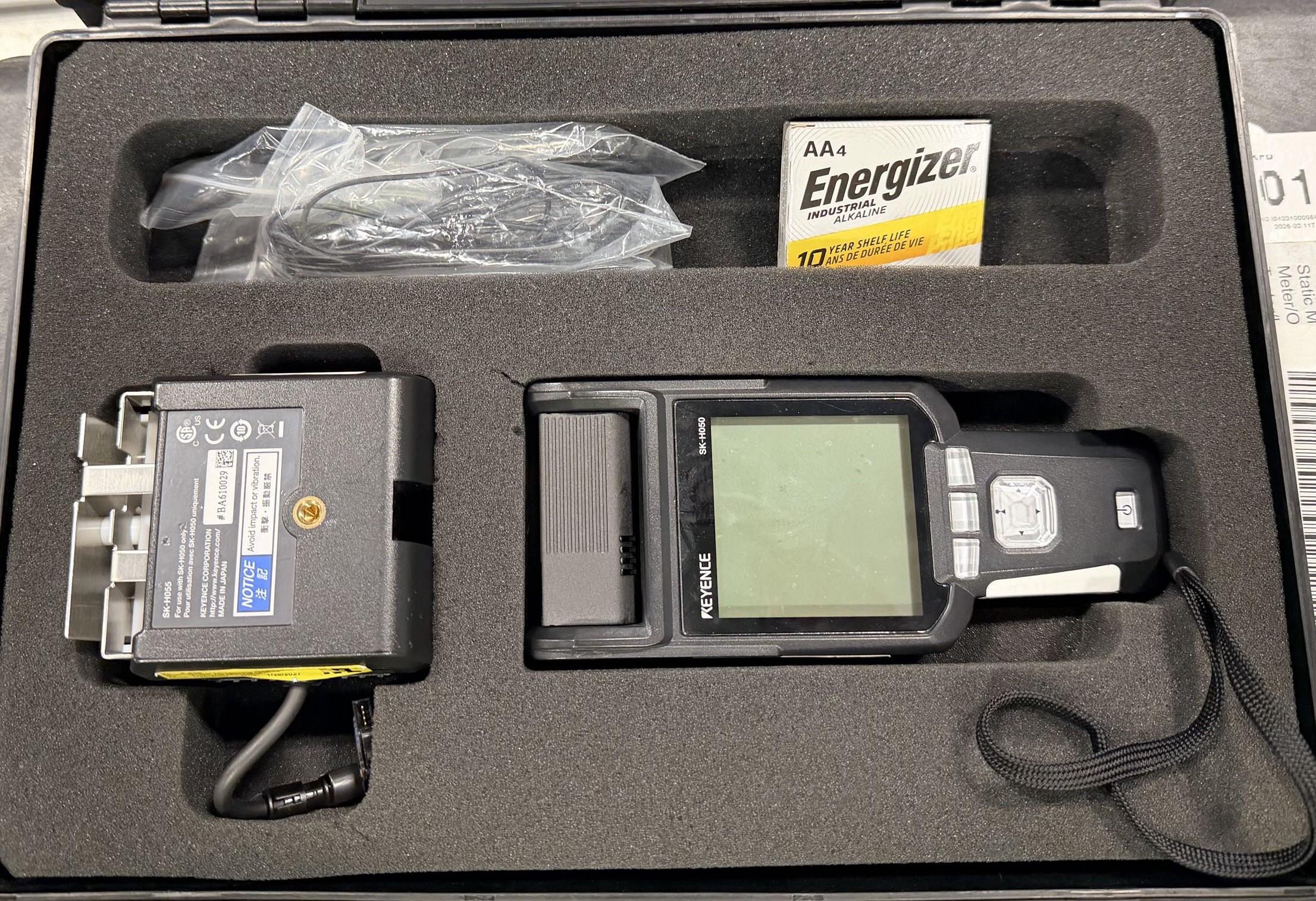
Built a Python toolchain that cut torque-test logging time by 93%.

PROBLEM
As a part of my internship, I was assigned a process improvement for torque studies, conducted at NAL's Paris Plant.
ACTION
I developed a two-program Python toolchain: a serial logger ingesting live data from the handheld DAQ display unit via USB as serial data and writing it to CSVs, and a companion graphing tool plotting average peak torque and one-third-peak-torque lines on each graph to check screw boss seat-strip ratio against a 1:3 internal standard (stricter than the 1:4 automotive standard).
RESULT
The two programs cut per-dataset logging time from 3:03 to 12.55 seconds (93% reduction); other engineers adopted the tool for their own torque studies before I left.
PythonDAQDestructive Testing
Small Parts Delivery Cost/ROI Analysis

Small Parts Delivery Cost/ROI Analysis

Cost/ROI study and standardization plan for small-parts conveyance on a plant-wide scale

PROBLEM
A significant problem at North American Lighting is the use of non-standard containers such as tupperwares to convey small parts to lines, resulting in low part density, causing higher operator and material handler labor.
ACTION
I identified candidate parts for standardization, built a cost summary comparing old low-part-density containers against newer high-density totes — factoring in both container cost and operator labor cost at each part density — and authored a process improvement plan for the plant to move forward with.
RESULT
Projected a reduction from ~$150/month to ~$30/month per part/line with a 3-month investment return period. This was scoped initially for one new launch line, with potential to expand plant-wide as old containers are phased out for the new totes.
Cost/ROI ModelingDFMProcess Improvement
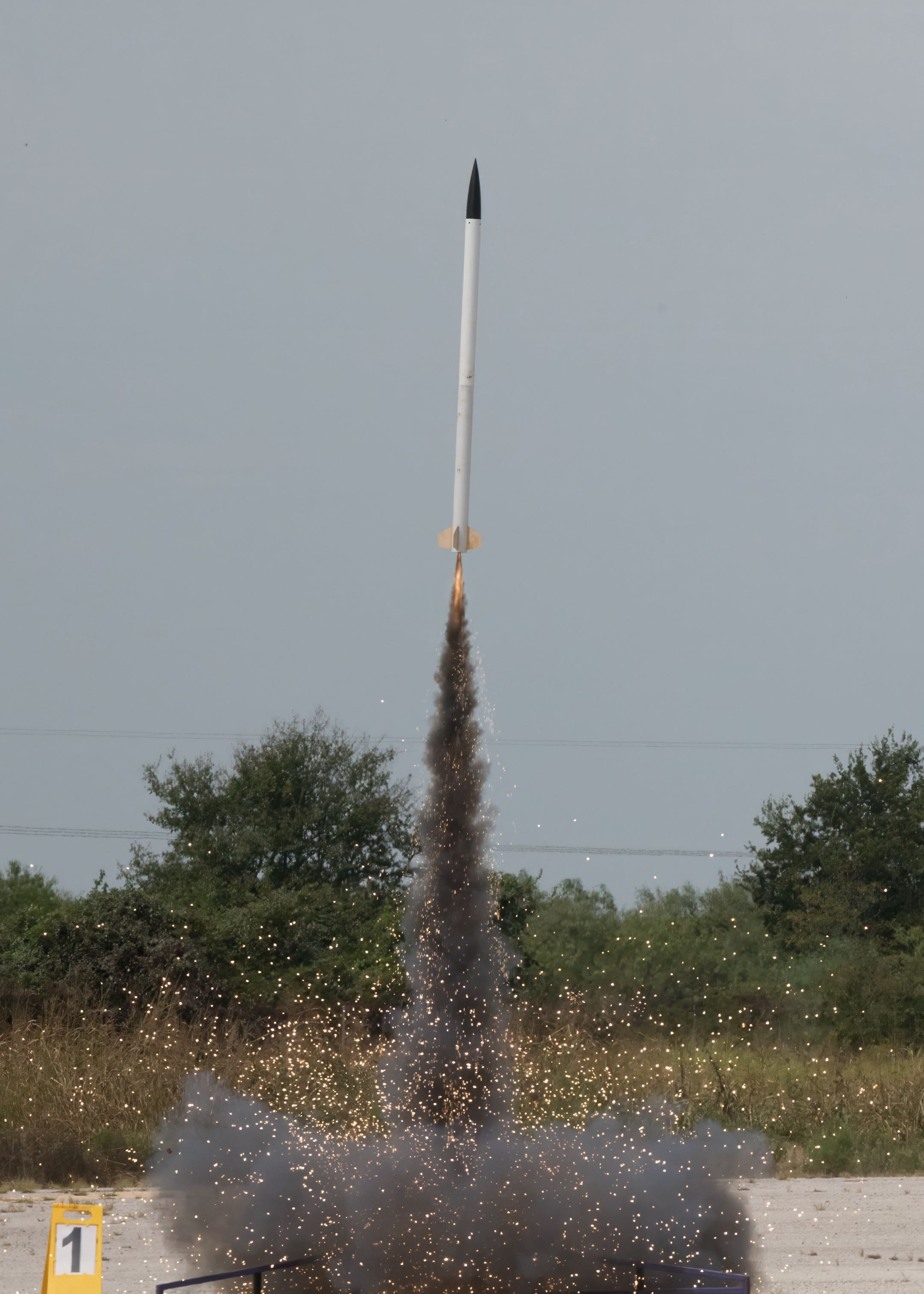
Falcon - Level 1 High Power Rocketry Certification

Falcon - Level 1 High Power Rocketry Certification

First HPR build and cert flight — cardboard, plywood, and epoxy construction.

PROBLEM
I wanted hands-on experience with rocketry and to try out a new hobby; high-powered rocketry seemed like a good option!
ACTION
I built the vehicle from cardboard, plywood, and epoxy, based on an existing L1 cert design. Since it flew on motor deploy, I did not have a way to test deployment. I built Falcon over the span of about a month, and finally flew it at the Tripoli Houston Hearne site in September of 2024.
RESULT
Fully successful certification flight.
TripoliHigh Power Rocketry
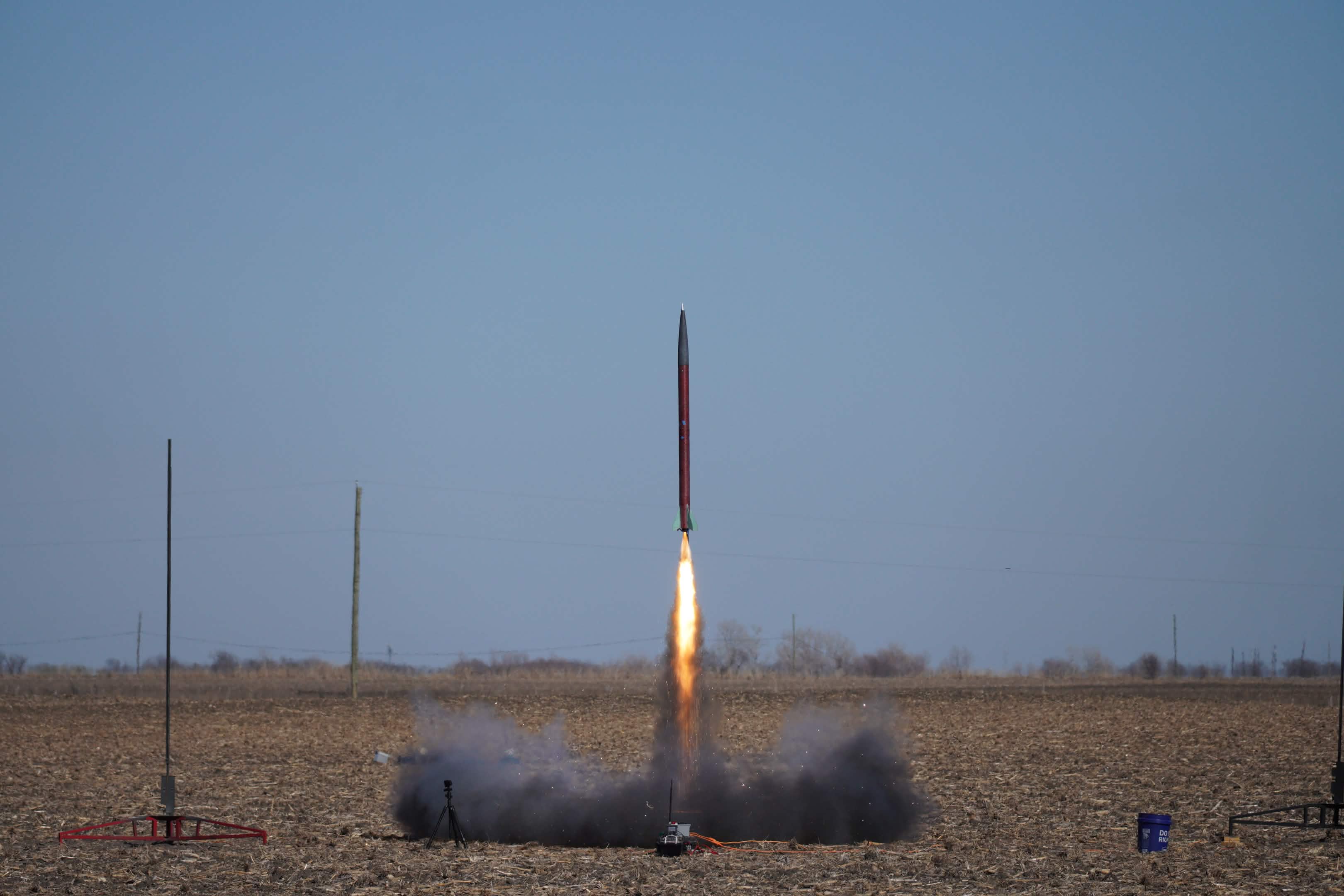
Raptor - Level 2 High Power Rocketry Certification

Raptor - Level 2 High Power Rocketry Certification

4" diameter, 81" fiberglass/epoxy vehicle, dual-deploy — flew to ~4,750 ft.

PROBLEM
I wanted to apply my knowledge from SRT gained over the last few years and wanted to fly fully dual-redundant electronics alongside a dual separation, dual deploy scheme. In preparation for an eventual L3 attempt, I decided to build the airframe out of as much fiberglass as possible and so I used off-the-shelf fiberglass tubes and plate. I built the airframe over the span of about 2 months in the summer of 2025 and successfully flew and recovered it in February of 2026.
ACTION
Designed and built a 4-inch diameter, 81-inch fiberglass/epoxy airframe with dual-deploy (drogue at apogee, main at lower altitude) electronics and tracking.
RESULT
Successful certification flight to approximately 4,750 feet; earned Tripoli Level 2 certification.
TripoliHigh Power RocketryCompositesDual-Deploy
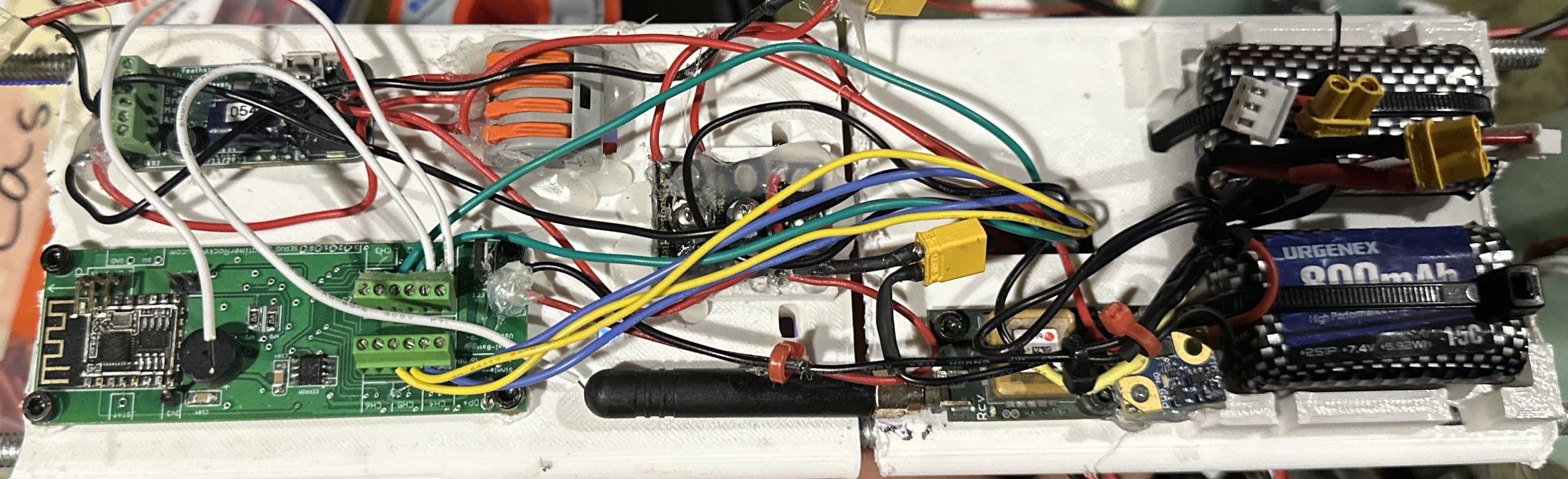
Enterprise — Two-Stage In-Flight Ignition Test Platform

Enterprise — Two-Stage In-Flight Ignition Test Platform

RE for Sustainer electronics

PROBLEM
Enterprise was built to test in-flight ignition of AeroTech's White Lightning propellant for a two-stage vehicle, as SRT's entry into the AeroTech Spaceshot Challenge. As the sustainer Recovery Engineer, I needed to design the full recovery system top-down: bay layout, charge sizing, and parachute sizing.
ACTION
Designed and integrated the electronics bay and charge cannons, then validated separation events with pop tests. This was the first project taken on after joining SRT, and included designing/integrating the vehicle's electronics (ignition system itself was out of scope).
RESULT
Second-stage ignition was successful, but the main parachute failed to fully deploy on descent.
Recovery SystemsHigh Power RocketryAvionics
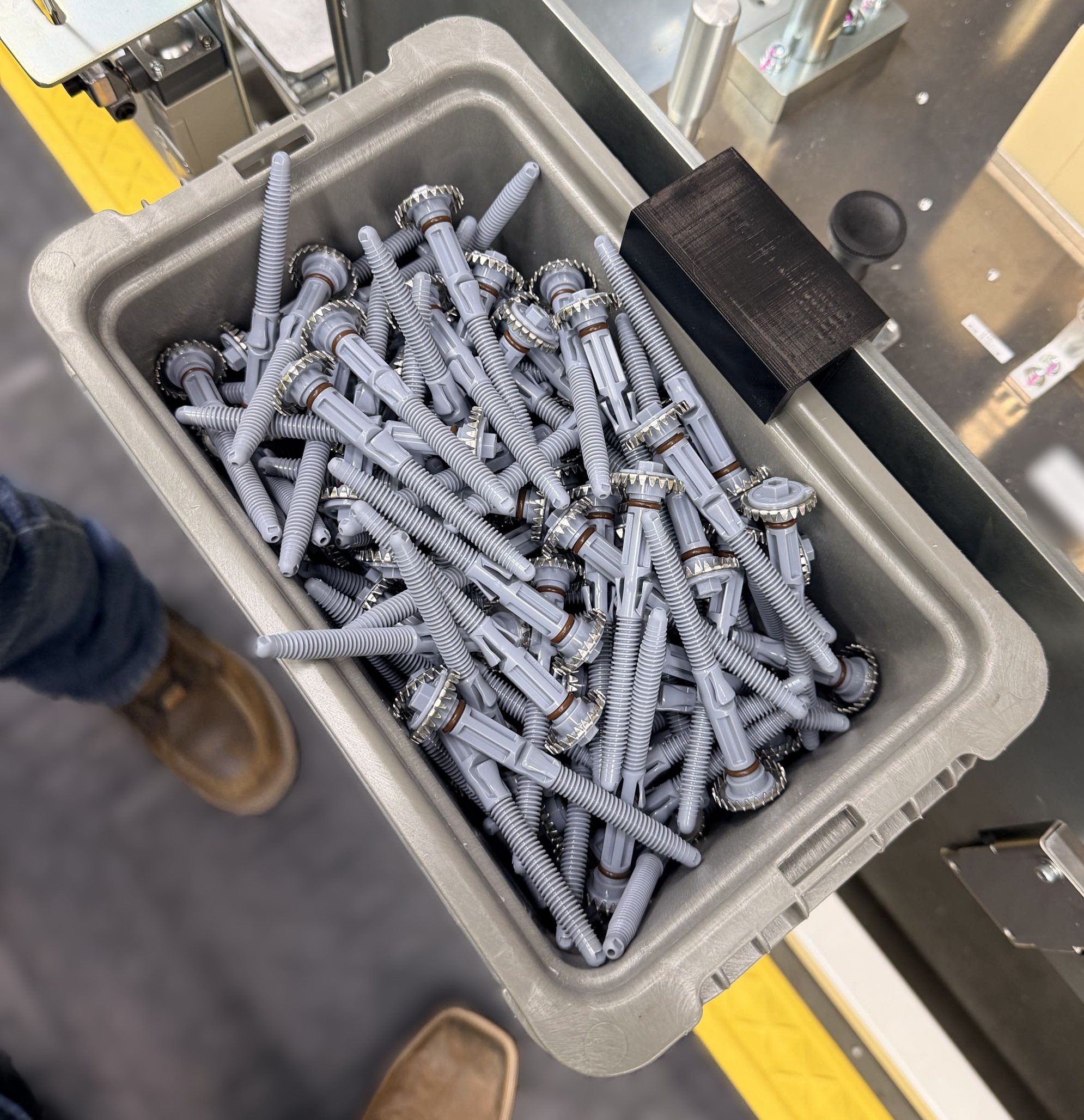
Tote-Mounting Bracket for Launch Line Tooling

Tote-Mounting Bracket for Launch Line Tooling

J-shaped bracket adopted as the standard for machine-front tote mounting on new launch lines.

PROBLEM
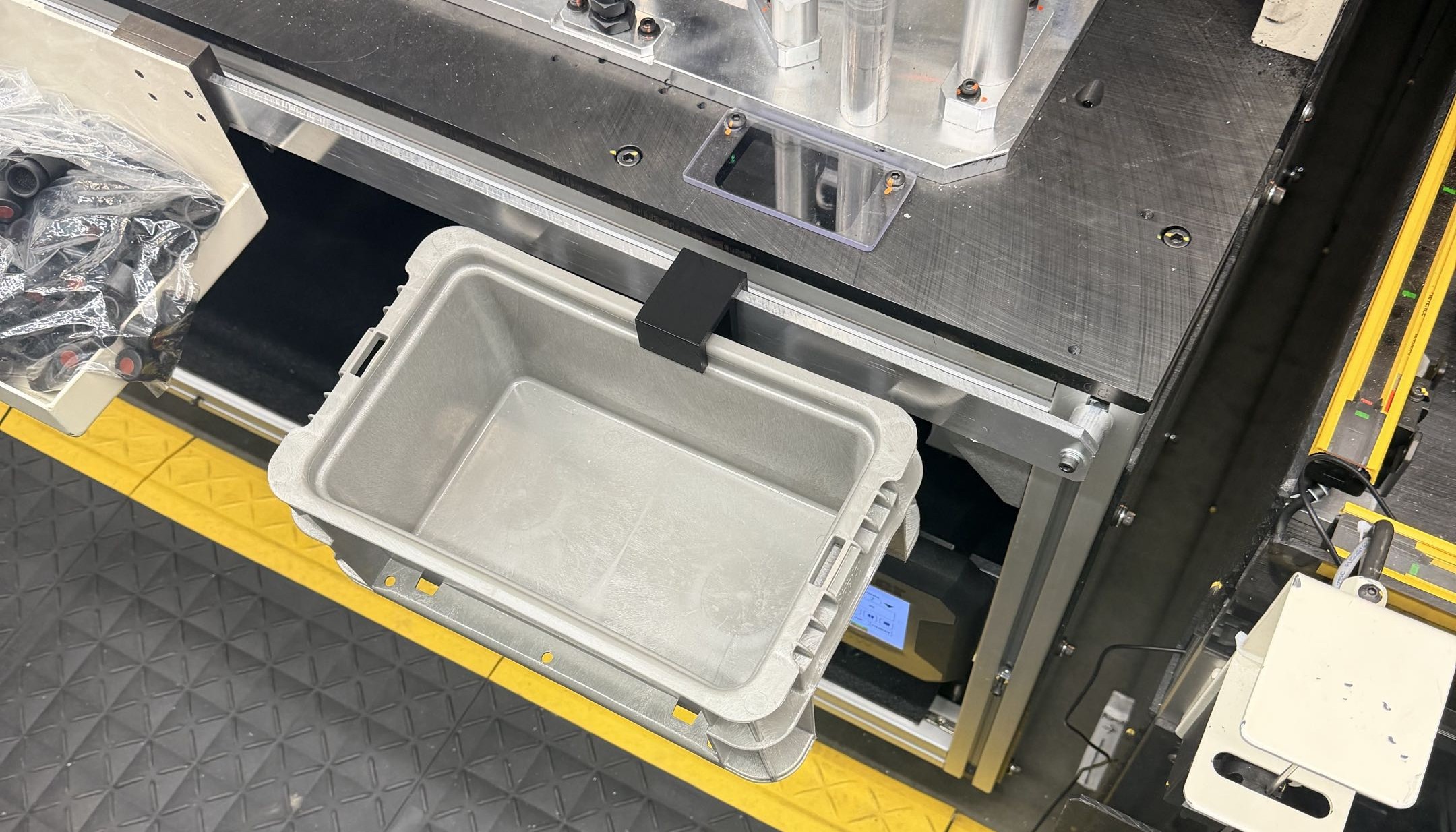
The plant I worked at over the summer was transitioning to new standard totes and wanted to mount them on machine frames to reduce operator cycle times as well as having them match similar lines at Koito plants in Japan. The Koito machines had a bespoke bracket that was too expensive to acquire or replicate internally.
ACTION
I designed a capital-J-shaped bracket: one lip clips onto the machine frame edge, the other reaches over and into the tote to hold it, with the base of the J supporting the tote's bottom. After initial design, I iterated on bracket sizing and material through multiple design passes before finalizing a carbon-fiber-reinforced printed version.
RESULT
Adopted as the standard bracket on the new launch line it was developed for, and specced out for other new launch lines still in the design phase — the most measurable impact of the internship.
SolidWorksFixture DesignDFM3D Printing
ESD Audit Process Improvement

ESD Audit Process Improvement

Redesigned the plant's ESD audit recording sheet and wrote SOPs for the audit equipment.

PROBLEM
I was assigned this project as a process improvement project (PIP) for the plant's ESD mitigation compliance audit process — the goal was to improve the process itself, not measure efficiency.
ACTION
I conducted an ESD audit on the launch line and sublines relevant to the new model I worked with (the audit equipment and process are used plant-wide). After this, I redesigned the data recording sheet to use conditional formatting checking measured values against acceptable minima/maxima, with a pass/fail column colored green or red. In tandem, I wrote standard operating procedure sheets for the audit equipment, which had been a source of confusion.
RESULT
My documentation was uploaded to the plant DCS; adoption not yet confirmed as of the end of the internship.
ESDProcess & QualityDocumentation

SHELVED

Level 3 High Power Rocketry Certification

Min-diameter 75mm high-performance vehicle, targeting Mach 2+ on a Loki M1650.

PROBLEM
Eventually I would like to complete my Level 3 certification and have begun preparation to do so. This is still pending completion of 2 remaining log flights, however I have begun simulations to get an idea of peak velocity and apogee.
ACTION
I have selected the motor (Loki Research M1650) and produced initial simulation/CAD files; no physical parts built yet.
STATUS
On hold pending completion of the 2 remaining log flights on Starfighter.
TripoliHigh Power RocketryMin-DiameterHigh-Speed Design

04 · RESUME

Full work history, coursework, and lab experience available as a PDF.